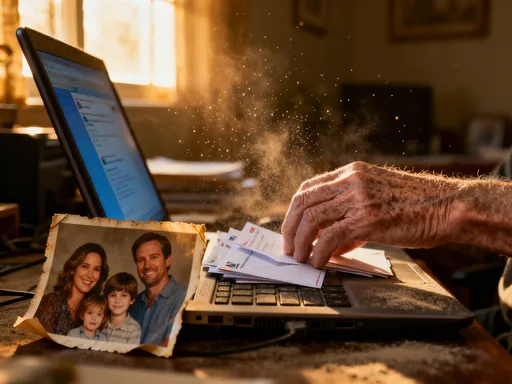
Why are you still losing precious memories in your cluttered inbox?
How often have you searched desperately for that heartfelt email from a loved one, only to get lost in a sea of newsletters and receipts? Your inbox isn’t just a tool—it’s a digital scrapbook hiding moments you’d hate to lose. I used to overlook this too, until I realized my emails held more than tasks—they held stories. A quick note from my sister after my first solo trip. My daughter’s teacher sharing her first art project. A friend’s late-night message saying, “I’m proud of you.” These weren’t clutter. They were quiet milestones. What if the key to preserving your life’s quiet, meaningful moments was already in your hands, quietly waiting to be organized?
The Overlooked Archive: When Emails Become Memories
We tend to think of email as a to-do list with an inbox. Messages pop in, we react, we delete or file, and move on. But if you pause and scroll back—really look—you’ll find something deeper. Buried between meeting reminders and online order confirmations are the soft beats of your life unfolding. That email from your mom the week before your wedding, wishing you joy and calm. The note from your cousin sharing her cancer diagnosis, and your reply full of love and strength. The job acceptance letter that changed your family’s future. These aren’t just messages. They’re emotional landmarks.
I remember when I was helping my teenage daughter write her college application essay. She wanted to talk about resilience—how she grew after switching schools, making new friends, and finding her voice. I suggested she include a story from fifth grade when she came home crying because no one sat with her at lunch. She nodded, but then said, “Wait—didn’t Ms. Parker email you that day?” I hadn’t thought about it in years. But I searched, and there it was: a kind, thoughtful message from her teacher saying, “She’s brave, even when she’s quiet.” Reading it together, we both teared up. That email wasn’t just a note—it was proof of growth. And if I hadn’t kept it? That moment might’ve faded into memory’s fog.
Emails like these form a timeline no social media can replicate. Unlike curated photos or fleeting stories, these are raw, real exchanges—unedited and sincere. They capture tone, timing, and truth. A simple “Thinking of you today” from a friend during a hard week. A forwarded recipe from your aunt with the note, “This reminds me of Sunday dinners at Grandma’s.” These fragments, when saved, become threads in the tapestry of your life. The danger isn’t losing the email—it’s losing the feeling it carries.
The Chaos of Clutter: How Disorganization Erases Meaning
Here’s the truth: a cluttered inbox doesn’t just slow you down—it silences your story. When everything is mixed together, the urgent drowns out the meaningful. I used to pride myself on having “only” a few hundred unread emails. Then one day, I needed to find a message from my father—the last one he sent before he passed. I remembered it was around Thanksgiving, but that was all. I searched his name, scanned dates, clicked through dozens of old threads. Nothing. Later, I found it—buried under a promo for a Black Friday sale and a password reset. It was there all along. But the clutter made it feel lost.
That experience changed how I see inbox chaos. It’s not just inefficient—it’s emotionally costly. When we can’t find what matters, we start to believe it doesn’t exist. We forget the encouragement we received. We miss the chance to reread a child’s excited note about a school play. We overlook the small affirmations that once lifted us. And over time, that absence chips away at our sense of connection. We feel lonelier, not because we lack love, but because we can’t access it.
Think about how often you’ve said, “I know I got an email about that,” only to give up after five minutes of searching. Maybe it was your son’s summer camp schedule, or your best friend’s travel itinerary. The frustration isn’t just about time—it’s about trust. You start to doubt your memory. You wonder, “Did she really say that?” or “Was I imagining it?” That uncertainty erodes confidence and warmth. But the real issue isn’t your memory. It’s your system. When your inbox is a dumping ground, it treats a love letter the same as a shipping update. And that indifference spreads—into how you see your relationships, your past, even yourself.
From Tool to Time Capsule: Rethinking Email’s Role
So what if we stopped treating email like a taskmaster and started seeing it as a storyteller? That shift in mindset changed everything for me. I began asking not “What do I need to do?” but “What do I want to remember?” This small change turned my inbox from a source of stress into a wellspring of meaning. I wasn’t just managing messages—I was curating memories.
Think of it like photo albums. We don’t throw all our pictures in a box and call it a day. We sort them—birthdays, vacations, holidays. We frame the special ones. We flip through them when we miss someone or need a smile. Why shouldn’t we do the same with emails? After all, a heartfelt message can carry just as much emotional weight as a photo. The words “I’m so proud of you” typed by your mom after your first public speech—those aren’t just text. They’re emotional heirlooms.
The beauty is, you don’t need to do this perfectly. You don’t need to save every email. Just the ones that make your heart pause. The ones that, when you read them, you feel a little fuller. That’s the goal: not inbox zero, but meaning preserved. When you see email as a time capsule, you start protecting what matters. You become intentional. You stop deleting too fast. You start saving with purpose. And slowly, your inbox transforms from a digital junk drawer into a quiet sanctuary of connection.
Smart Folders and Labels: Building Your Emotional Index
Now, let’s get practical—without getting overwhelmed. The key to preserving memories isn’t spending hours organizing. It’s creating a simple, kind system that works with your life, not against it. I started by making a few labeled folders—nothing fancy, just names that spoke to my heart. “Family Letters.” “Milestone Moments.” “Words That Lifted Me.” “Our Travel Dreams.” “Kids Growing Up.” Each one became a home for emails I never wanted to lose.
Here’s how it works: when I get a message that feels special, I don’t just leave it in my inbox. I right-click, choose “Move to Folder,” and pick the right one. That email from your daughter’s piano recital invitation? “Kids Growing Up.” The note from your sister after your mom’s surgery, saying, “We got through it together”? “Family Letters.” The encouragement from your coworker when you doubted yourself? “Words That Lifted Me.” Over time, these folders become emotional archives—easy to find, safe to revisit.
You might worry, “What if I don’t have time for this?” I get it. Life is busy. But this isn’t about perfection. It’s about small, consistent choices. Try this: once a week, spend five minutes reviewing your inbox. Not to clear it—just to rescue one meaningful message. Drag it into the right folder. That’s it. In a year, you’ll have over fifty preserved moments. And when you need them—when you’re feeling low, or proud, or nostalgic—you’ll know exactly where to look.
Some people prefer labels, especially if they use Gmail. Labels work like tags—you can assign more than one to an email. For example, an email about your anniversary trip could have both “Our Travel Dreams” and “Milestone Moments.” Later, you can click the label and see every message tied to that theme. It’s like creating playlists for your life. The method doesn’t matter—what matters is that you create a system that feels personal and doable.
Search Smarts: Finding Moments in Seconds, Not Hours
Even with folders, sometimes you just need to find something fast. That’s where modern search tools shine. Most of us type a name or subject and give up if the email doesn’t pop up. But with a few smart tricks, you can find almost anything in seconds. Think of it as using a flashlight in a dark room—you just need to know where to point it.
Let’s say you want to find that email from your brother about planning a family reunion. Instead of searching “family reunion,” try this: type “from:brother subject:reunion” in the search bar. This narrows it down to messages from him with “reunion” in the subject. Even better, if you remember he mentioned a date, add “after:2022-06-01” to only see emails from that summer. These search operators—like “from:”, “subject:”, “after:”, “has:attachment”—are simple but powerful. You don’t need to memorize them all. Just learn one or two that fit your needs.
Another trick? Use quotes for exact phrases. If you’re looking for a note that said, “I’ll always be your person,” search “I’ll always be your person” with quotes. That tells the system to find that exact sentence, not just emails with those words scattered around. I used this once when I wanted to read a message from my best friend during a rough week. I found it in seconds. And reading it again? It felt like a hug from the past.
You can also save searches. In Gmail, for example, you can create a filter and label all emails from your children’s school with “School Updates.” Then, anytime you want to see them, you just click the label. Or save a search like “from:husband subject:love” and name it “Sweet Messages.” It’s like bookmarking emotional moments so you can return to them easily. These tools aren’t just for productivity—they’re for emotional access. They help you stay connected to the people who matter, even when life pulls you apart.
Scheduled Reflections: Making Memory Preservation a Habit
Here’s a secret: preserving memories doesn’t have to be a chore. It can be a ritual—a quiet moment of reflection that grounds you. I started doing this after a tough year when I felt disconnected from my family and myself. I realized I was so busy managing life that I wasn’t savoring it. So I set a monthly reminder: “Memory Check-In.” Every fourth Sunday, I spend 20 minutes with my inbox—no pressure, no to-do list. Just me, my coffee, and my past.
During this time, I open my saved folders. I reread a few emails. I laugh at old jokes. I feel gratitude for the people who’ve shown up for me. Sometimes I move a message to a new folder if it fits better. Other times, I just sit with a note that still moves me. It’s become a form of digital journaling—one that doesn’t require writing, just remembering. And the impact? I feel more centered, more thankful, more like myself.
You can start small. Pick a day each month—maybe the first of the month, or the day after payday when you’re already checking bills. Set a 10-minute timer. Open your “Family Letters” folder. Read one email. That’s it. Over time, this habit builds emotional resilience. On hard days, you’ll know you have a folder full of proof that you’re loved, that you’ve grown, that you’ve overcome. And on good days, it deepens your joy by helping you see how far you’ve come.
This isn’t about hoarding emails. It’s about honoring them. It’s about saying, “This moment mattered.” And when you make space for that recognition, you start living more mindfully. You become more present, because you’re more aware of what’s worth keeping.
Peace of Mind: The Quiet Power of a Clear, Meaningful Inbox
At the end of the day, organizing your inbox isn’t about looking efficient. It’s about feeling at peace. There’s a deep comfort in knowing your memories are safe—no longer at the mercy of a cluttered system or a forgotten search. When your inbox is clear and meaningful, it becomes more than a tool. It becomes a companion. One that holds your history, reflects your heart, and supports your well-being.
I’ll never forget the time I was helping my son prepare for a job interview. He was nervous, doubting his abilities. I asked, “Remember what your science teacher wrote about you in 10th grade?” He didn’t. But I found the email—praise for his curiosity, his persistence, his kindness. I printed it and gave it to him. He read it quietly, then said, “I forgot people saw me that way.” That moment wasn’t just about confidence. It was about identity. And it was preserved in an email I almost deleted.
That’s the quiet power of this practice. It doesn’t shout. It doesn’t demand attention. But it’s always there—ready to remind you of who you are, who loves you, and how far you’ve come. In a world that moves too fast, that’s a rare gift. So start small. Save one email. Create one folder. Set one reminder. You’re not just organizing messages. You’re protecting your story. And that story? It’s worth every second.