More Than Memories: How Smart Apps Help Me Capture Life’s True Moments
Life slips by in blinks—a laugh, a quiet morning, a child’s first step. I used to miss them, buried under routines and distractions. But lately, something’s changed. Not because my days got slower, but because the way I notice moments did. With smart tools that learn me, not just track me, I’m finally holding onto what matters. It’s not about taking more photos. It’s about feeling more of life as it happens. And honestly? I didn’t expect a phone to help me feel more human.
The Moment I Realized I Was Missing My Own Life
It was a rainy Tuesday, the kind where the sky matches your mood. My youngest had spilled juice on the carpet—again—and I was knee-deep in laundry, coffee gone cold. I opened my phone to distract myself, scrolling through thousands of photos I’d taken over the past year. There were birthday parties, school drop-offs, weekend trips. But as I swiped, a strange emptiness settled in. These weren’t memories. They were data. A digital graveyard of moments I’d captured but never truly felt.
I paused on a blurry image of my daughter blowing out birthday candles. I remembered taking it, but not the way her eyes sparkled when she made her wish. I had the photo, but I’d missed the magic. That’s when it hit me: I wasn’t living my life—I was archiving it. And archiving isn’t the same as experiencing. I was so focused on getting the shot, tagging it, saving it, that I’d stopped being present. I realized then that I didn’t need more photos. I needed to feel the ones I already had. I needed help—not just storing memories, but finding them again in a way that mattered.
This wasn’t about technology failing me. It was about how I was using it. I’d treated my phone like a camera, when maybe it could be something more—a quiet companion, a thoughtful observer, a gentle reminder to look up and breathe. I didn’t want to stop documenting. I just wanted to stop losing myself in the process.
From Snapshots to Stories: What Smart Recommendation Systems Actually Do
Let’s be honest—when we hear ‘AI’ or ‘smart algorithms,’ our minds jump to robots and complex tech we don’t understand. But what if I told you that some of the most powerful tech in your pocket isn’t trying to impress you with speed or specs, but with sensitivity? That’s exactly what modern photo and memory apps are doing now. They’re not just storing your pictures—they’re learning to understand them.
Think of it like this: imagine a friend who’s been with you for years. They know when you laugh hardest, when you’re tired, when you light up around certain people. They don’t just see your smile—they know what caused it. That’s what smart recommendation systems are starting to do. They analyze patterns in your photos—time of day, location, who’s in the frame, even facial expressions—to identify what’s truly meaningful.
For example, the app might notice that every Sunday morning, you take a walk with your dog and your daughter. It sees the sunlight filtering through the trees, the way your daughter skips ahead, how relaxed your shoulders look. Over time, it learns that these are not just random walks—they’re moments of peace in your week. So instead of burying them in a folder called ‘Miscellaneous,’ it surfaces them. Maybe on a tough Monday, it shows you that one photo of your daughter mid-laugh, wind in her hair. It’s not random. It’s intentional. The system isn’t just reacting—it’s anticipating what you might need to feel better.
And here’s the beautiful part: you don’t have to do anything. No tagging, no sorting. The app learns quietly, in the background, like a gardener tending to a garden you didn’t even know you planted. It doesn’t replace your memory—it helps you reclaim it.
How My Phone Started Feeling Like It Understood Me
I’ll never forget the first time my phone surprised me in a good way. It was a regular Sunday—laundry in the dryer, coffee brewing, the dog barking at a squirrel. I’d taken a few photos that morning: my daughter tying her shoes, our dog napping in a sunbeam, a close-up of steam rising from my mug. Nothing extraordinary. Later that evening, a gentle notification popped up: ‘Remember this morning?’
I tapped it, and there it was—a short slideshow of those quiet moments. No music, no filters. Just the images, one after another. And suddenly, I wasn’t just seeing them—I was reliving them. I could almost smell the coffee, hear my daughter’s focused breathing as she worked the laces, feel the warmth of the sun on my skin. It was like someone had handed me a warm blanket for my soul.
What amazed me wasn’t that the app showed me photos—it was that it chose those photos. I would’ve deleted them. To me, they were just filler. But the app saw something else. It noticed the consistency—these were the kinds of moments that appeared in my happiest weeks. It recognized the soft light, the calm expressions, the absence of stress. It didn’t just recognize patterns; it recognized peace.
That’s when it clicked: this wasn’t just a machine. It was learning my emotional rhythm. It wasn’t tracking my steps or my screen time—it was tracking my joy. And in a world that often feels chaotic, having something that quietly notices what brings you calm? That’s not just useful. That’s comforting. It made me wonder—what else have I been overlooking because I assumed technology could never get me?
Turning Daily Chaos into Quiet Clarity
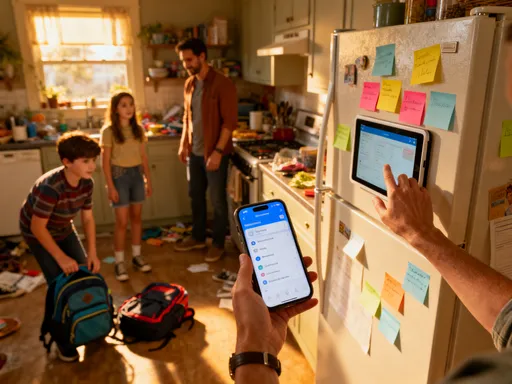
Let’s talk about real life. Mornings are a whirlwind—breakfast, backpacks, last-minute permission slips. Work emails pile up before I’ve even finished my second cup of coffee. Evenings are homework, dinner, baths, bedtime stories. By the time I sit down, I’m drained. There’s no time to reflect. No space to breathe. And yet, somewhere in that chaos, there are golden moments—tiny sparks of connection, laughter, love.
Before, I’d miss them. Or worse, I’d try to capture them and end up missing them anyway, fumbling with my phone while the moment passed. Now, I don’t have to choose between living and recording. The smart apps in my phone do the noticing for me. They’re like silent witnesses, collecting the fragments of beauty I’m too busy to hold onto.
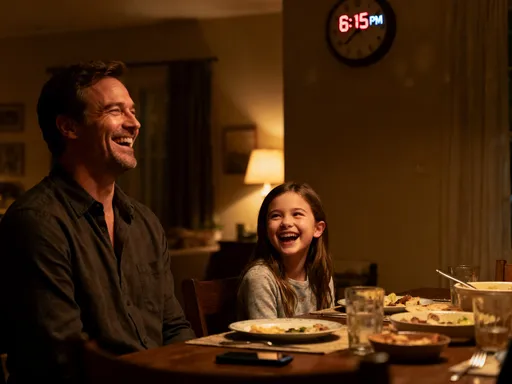
One of my favorite examples happened before my son’s eighth birthday. I hadn’t planned a big celebration—just a small family dinner. But two days before, my phone showed me a compilation: clips of him laughing at a cartoon, blowing out candles at a friend’s party, hugging our dog. It was labeled ‘For You: A Week of Leo.’ I hadn’t asked for it. But seeing it brought tears to my eyes. It wasn’t just a video—it was a reminder of who he is, how much he’s grown, how much I love him. It became my mental gift to myself before any wrapped present appeared under the tree.
This is the real power of smart organization: it doesn’t just sort your photos. It gives you back your emotional bandwidth. Instead of spending energy searching for memories, you’re gifted them. And in those quiet moments of surprise and recognition, you find clarity. You remember what matters. You feel more connected to your life, not less.
Building a Deeper Connection With Myself and Others
One of the most unexpected benefits of using smart memory apps has been how they’ve helped me understand myself better. I’ve always known I love my family, but seeing patterns in my photos—what makes me smile, what makes me pause, when I look most at ease—has given me a mirror I didn’t know I needed.
For instance, I noticed that my most relaxed photos are always taken outdoors, early in the morning. Not because I planned them, but because the app surfaced them together. I saw a pattern: sunlight, coffee, quiet. And it made me realize—I’m not just a busy mom. I’m someone who deeply values stillness. That simple insight changed how I plan my days. Now, I protect those morning moments like gold. I don’t schedule calls before 8 a.m. I let the house stay messy. Because I’ve learned that my peace isn’t a luxury—it’s a necessity.
And it’s not just about me. These apps have helped me connect more deeply with my kids, too. I created a shared album for my daughter, and every few weeks, the app adds new moments—her reading on the couch, dancing in the kitchen, holding her brother’s hand. When we watch it together, she doesn’t say, ‘Can I post this?’ She says, ‘Remember when we did that?’ And we talk. We laugh. We remember. It’s not about likes or followers. It’s about presence. It’s about building a shared language of love, one quiet moment at a time.
Technology, when used with care, doesn’t have to pull us apart. It can actually bring us closer—by helping us see each other more clearly, by preserving the softness in a world that often feels hard.
Simple Ways to Let Technology Work for You (Without Taking Over)
I know what you’re thinking—this all sounds great, but isn’t it just another thing to manage? Another app to check, another setting to tweak? I felt that way too. But the truth is, the less you try to control it, the more it helps. The key is to set it up once, then let it breathe.
Start with auto-curation. Most modern photo apps have a ‘Memories’ or ‘Highlights’ feature. Turn it on. Let the app learn what matters by observing what you linger on, what you share, what you save. Don’t worry about perfection. The system improves over time, just like a real relationship.
Next, consider adding emotional tags—privately, just for you. Some apps let you label moments with feelings like ‘calm,’ ‘proud,’ or ‘grateful.’ You don’t have to do it for every photo. Just a few. Over time, the app starts to recognize what those emotions look like in your life. A quiet breakfast might be ‘calm.’ A school play might be ‘proud.’ And when you’re having a tough day, you can ask it to show you moments of pride or peace. It’s like having a personal emotional first-aid kit.
And here’s a tip: allow for downtime. Don’t check the app every day. Let the surprises come to you. That’s part of the magic—receiving a memory you didn’t know you needed. It’s not about constant engagement. It’s about meaningful connection.
Most importantly, stay in charge. This isn’t about letting technology run your life. It’s about using it to enhance your attention, not replace it. Think of it like a kitchen tool—a good knife doesn’t cook for you, but it makes cooking easier. In the same way, a smart app doesn’t live your life for you, but it helps you savor it.
Living More Fully, One Noticed Moment at a Time
Looking back, I realize the shift wasn’t really about technology. It was about intention. I used to think I needed to capture everything to remember it. Now I know that remembering isn’t about volume—it’s about value. It’s not how many photos you take, but how deeply you feel the ones you have.
Smart apps haven’t changed my life by doing something extraordinary. They’ve changed it by helping me notice the ordinary. The way my son hums when he’s concentrating. The way my dog sighs when he settles in for a nap. The quiet joy of a clean kitchen at the end of a long day. These aren’t grand events. They’re the fabric of a life well-lived.
And here’s what I’ve learned: the future of technology isn’t about capturing more. It’s about cherishing what we already have. It’s about tools that don’t distract us from life, but gently guide us back to it. It’s about feeling more, not doing more.
So if you’re like I was—buried in photos but starving for connection, busy but not truly present—try this: let your phone do a little more of the remembering. Not so you can check one more thing off your list, but so you can finally look up, breathe deep, and say, ‘I’m here. I see this. And it’s beautiful.’
Because life isn’t lived in the highlights. It’s lived in the quiet moments between. And now, thanks to a little smart tech, I’m finally noticing them.