Bend Without Breaking: How I Regained Flexibility Through Smart Rehab Training
Flexibility isn’t just for yogis or athletes—it’s a vital part of everyday movement and long-term health. After years of stiffness and discomfort, I discovered that targeted rehabilitation training could truly transform my body’s range of motion. This journey taught me how flexibility, when supported by consistent, science-backed rehab exercises, helps prevent injury, ease pain, and improve quality of life. Here’s what actually works.
The Hidden Cost of Stiffness
Many people dismiss stiffness as a natural part of aging or the price of a busy life. Yet, the reality is that poor flexibility silently undermines daily function in ways that accumulate over time. Simple actions like bending to tie a shoe, reaching for a high shelf, or turning to check a blind spot while driving can become awkward or painful. These are not isolated inconveniences—they are early signs of reduced mobility that, if ignored, can lead to more serious limitations. Over time, tight muscles and shortened connective tissues alter the way joints move, increasing stress on tendons and ligaments and raising the risk of strains or falls, especially during unexpected movements.
What makes stiffness particularly insidious is its gradual onset. Unlike acute injuries that demand immediate attention, inflexibility creeps in quietly. A person may notice they can’t touch their toes as easily as before, or that getting out of a car requires more effort, but these changes often seem minor and are easily rationalized. However, research shows that reduced range of motion in key joints—such as the hips, shoulders, and spine—is strongly associated with functional decline in middle and later life. The body compensates for tight areas by shifting movement patterns, which can lead to muscle imbalances and joint wear. For example, tight hamstrings may contribute to lower back strain, while stiff shoulders can affect posture and breathing mechanics.
Moreover, stiffness is not just a physical limitation—it can impact emotional well-being. Chronic discomfort can lead to frustration, reduced activity levels, and even social withdrawal. When movement becomes effortful, people tend to do less, which further accelerates stiffness in a vicious cycle. The solution is not to accept this as inevitable, but to recognize flexibility as a trainable quality. Just as strength and endurance can be improved with exercise, so too can the body’s ability to move freely. The key lies in understanding that flexibility is not merely about stretching muscles, but about restoring healthy movement patterns through intelligent, rehabilitative training.
Why Flexibility Matters Beyond Stretching
There is a common misconception that flexibility is achieved solely through static stretching—holding a position until a muscle feels elongated. While stretching has its place, true functional flexibility involves much more. It refers to the body’s ability to move joints through their full, natural range of motion with control, ease, and stability. This kind of flexibility supports joint health by ensuring that muscles, tendons, and ligaments work together efficiently. When joints move properly, they receive better circulation, which nourishes cartilage and reduces wear. Poor joint mobility, on the other hand, can lead to stiffness, inflammation, and degenerative changes over time.
Flexibility also plays a critical role in posture and alignment. The human body is designed to maintain a balanced posture with minimal strain, but tight muscles can pull the skeleton out of alignment. For instance, tight hip flexors from prolonged sitting can tilt the pelvis forward, leading to lower back pain. Similarly, tight chest muscles can pull the shoulders forward, contributing to rounded shoulders and neck tension. Restoring balance through targeted flexibility work helps realign the body, reducing mechanical stress and improving overall comfort.
From a neurological perspective, flexibility is regulated by the nervous system. Muscles have built-in protective mechanisms—such as the stretch reflex—that prevent overextension and potential injury. When a muscle is stretched too quickly or too forcefully, these reflexes trigger contraction to protect the tissue. This is why aggressive stretching can be counterproductive; it activates the very defenses that limit movement. Effective flexibility training works with the nervous system, using slow, controlled movements and techniques like proprioceptive neuromuscular facilitation (PNF) to signal safety and encourage gradual lengthening. This approach is especially important in rehabilitation, where restoring range of motion after injury or surgery is essential for full recovery.
Rehab Training: More Than Just Bouncing on a Mat
Rehabilitation training for flexibility is not the same as a generic stretching routine or a high-intensity workout. It is a structured, individualized process designed to correct movement dysfunctions and restore optimal function. Unlike performance-based exercise programs that focus on strength, speed, or endurance, rehab training prioritizes quality of movement, joint integrity, and long-term sustainability. It begins with an assessment of movement patterns—identifying which areas are restricted, which muscles are overactive or underactive, and how the body compensates for imbalances. From there, a progressive plan is developed to address specific limitations in a safe and systematic way.
One of the core principles of rehab training is consistency. Flexibility gains are not achieved through occasional intense sessions, but through regular, mindful practice. The body adapts slowly to new demands, and connective tissues like tendons and fascia require sustained, gentle loading to remodel and lengthen. Another essential principle is proper form. Performing exercises with incorrect alignment can reinforce poor movement habits or even cause injury. For example, rounding the back during a forward bend may stretch the hamstrings but place dangerous stress on the spine. Therefore, attention to technique is non-negotiable in rehab training.
Gradual progression is equally important. Pushing too hard too soon can trigger inflammation or muscle guarding, setting back progress. Instead, rehab emphasizes small, incremental improvements—holding a stretch a few seconds longer, increasing range of motion by a few degrees, or adding controlled repetitions. This approach builds resilience and prevents setbacks. Finally, body awareness is a cornerstone of effective rehab. Learning to recognize subtle cues—such as muscle tension, joint position, or breathing patterns—allows individuals to adjust their movements in real time and respond to their body’s needs. This mind-body connection transforms rehab from a mechanical routine into a personalized, adaptive practice.
The Four Pillars of Effective Flexibility Rehab
Successful flexibility rehabilitation rests on four foundational components: dynamic warm-ups, static and PNF stretching, strength training for stability, and mobility drills. Each plays a distinct role in restoring and maintaining functional movement. Together, they create a balanced approach that addresses both flexibility and the strength needed to control it.
Dynamic warm-ups prepare the body for movement by increasing blood flow, raising muscle temperature, and activating the nervous system. Unlike static stretching before activity—which can temporarily reduce muscle power—dynamic movements gently take joints through their range of motion in a controlled way. Examples include leg swings, arm circles, and walking lunges with a twist. These exercises mimic real-life movements and help the body transition from rest to activity without strain. Performing five to ten minutes of dynamic warm-up before any flexibility or strength work enhances performance and reduces injury risk.
Static stretching involves holding a stretch for 20 to 60 seconds to lengthen muscles and improve tissue extensibility. It is most effective after exercise, when muscles are warm. Common static stretches include the seated forward bend for hamstrings, the kneeling hip flexor stretch, and the shoulder cross-body stretch. While simple, static stretching requires patience and focus. The key is to feel a gentle pull, not pain, and to breathe deeply to help relax the muscle. PNF stretching takes this a step further by combining contraction and relaxation. For example, in a hamstring PNF stretch, a person gently pushes against resistance for a few seconds, then relaxes into a deeper stretch. This technique leverages the nervous system’s reflexes to achieve greater gains in flexibility over time.
Strength training is often overlooked in flexibility programs, yet it is essential for joint stability. Flexible muscles without strength can lead to hypermobility and instability, increasing injury risk. Strengthening the muscles around a joint—such as the glutes for hip stability or the rotator cuff for shoulder support—ensures that improved range of motion is controlled and functional. Exercises like bridges, clamshells, and wall push-ups can be integrated into rehab routines to build strength without strain. Finally, mobility drills focus on joint articulation and movement quality. These include controlled spinal rotations, ankle circles, and thoracic extensions over a foam roller. Mobility work enhances coordination and reduces stiffness in connective tissues, making everyday movements smoother and more efficient.
Listening to Your Body: The Mind-Muscle Connection
One of the most powerful tools in flexibility rehab is also the most overlooked: the ability to listen to one’s body. Mindful movement—performing exercises with full attention to sensation, breath, and form—is essential for safe and effective progress. The body communicates through subtle signals: a slight tightness, a shift in balance, a change in breathing. Learning to interpret these cues allows individuals to adjust their efforts and avoid pushing beyond safe limits.
A critical distinction in rehab training is understanding the difference between discomfort and pain. Mild discomfort—such as a gentle stretch sensation—is normal and indicates that tissues are being loaded. Sharp, stabbing, or radiating pain, however, is a warning sign that something is wrong. Respecting these boundaries prevents injury and builds trust in the process. Forcing a stretch in hopes of faster results often leads to setbacks, as the body responds by tightening up defensively. Patience and consistency yield better long-term outcomes than aggressive, inconsistent efforts.
Breath control is a simple yet effective way to enhance body awareness. Deep, rhythmic breathing helps calm the nervous system, reduce muscle tension, and increase oxygen flow to working tissues. Inhaling during preparation and exhaling during the stretch or effort phase can improve movement efficiency. Slow, focused repetitions—such as performing a lunge with full control—also deepen the mind-muscle connection. Over time, this mindful approach fosters a greater sense of body confidence and reduces fear of movement, which is especially important for those recovering from injury or chronic pain.
Integrating Flexibility Into Daily Life
One of the biggest challenges in flexibility training is making it a sustainable habit. Many people start with enthusiasm but struggle to maintain consistency due to time constraints or lack of motivation. The solution lies in integration—embedding short, manageable sessions into existing routines. Research shows that brief, frequent practice is more effective than infrequent, lengthy workouts. Just five to ten minutes of targeted exercises done daily can produce noticeable improvements over weeks and months.
Habit stacking—pairing a new behavior with an established one—is a proven strategy for building lasting habits. For example, doing a few neck and shoulder rolls after brushing teeth in the morning, or performing a seated forward bend while waiting for the coffee to brew. At work, simple adjustments like standing up to stretch every hour, using a resistance band at the desk, or sitting on a stability ball can keep the body moving. Evening routines might include gentle stretching or a short mobility sequence before bed, which can also promote relaxation and better sleep.
Creating a dedicated space at home—such as a corner with a mat, foam roller, and resistance band—makes it easier to start a session without friction. Scheduling flexibility work like any other important appointment increases accountability. The goal is not perfection, but consistency. Missing a day is not failure; the key is returning to the routine without self-criticism. Over time, these small efforts compound, leading to greater ease of movement, reduced discomfort, and increased confidence in daily activities.
When to Seek Professional Guidance
While self-directed flexibility training can be highly effective, there are situations where professional guidance is essential. Certain symptoms—such as sharp pain, swelling, numbness, tingling, or loss of strength—should never be ignored. These may indicate underlying conditions like nerve compression, joint dysfunction, or tissue damage that require expert evaluation. Additionally, individuals recovering from surgery, fractures, or serious injuries should work with a physical therapist to ensure safe and appropriate rehabilitation.
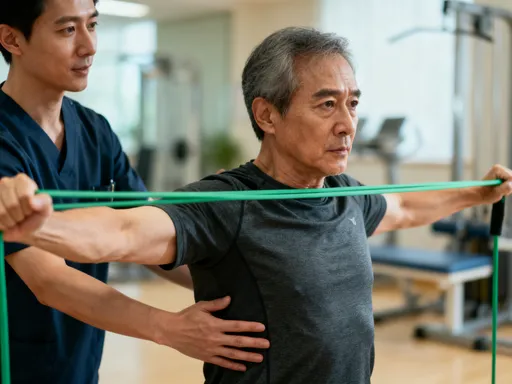
A certified physical therapist or rehabilitation specialist can perform a comprehensive assessment, identify movement impairments, and design a personalized program. They can also provide hands-on techniques—such as manual therapy or joint mobilization—that are difficult to replicate at home. For those unsure where to start or who have plateaued in their progress, professional input can provide clarity and direction. Working with a qualified trainer also enhances safety, reduces the risk of improper technique, and increases the likelihood of long-term success.
It is important to recognize that seeking help is not a sign of weakness, but a smart and responsible choice. Just as one would consult a dentist for oral health or an optometrist for vision, consulting a movement specialist for musculoskeletal health is a proactive step toward well-being. Professional support can accelerate progress, prevent complications, and empower individuals with the knowledge and skills to manage their own flexibility for years to come.
Regaining flexibility is not about achieving extreme poses or contorting the body into unnatural positions. It is about restoring the ability to move with ease, comfort, and confidence in everyday life. The journey requires patience, consistency, and a willingness to listen to the body. By embracing rehabilitation principles—targeted exercises, mindful movement, and gradual progression—anyone can improve their range of motion and enhance their quality of life. Flexibility is not a luxury; it is a fundamental pillar of health, independence, and long-term well-being. Making it a lifelong commitment is one of the most valuable investments a person can make in their physical and emotional health.